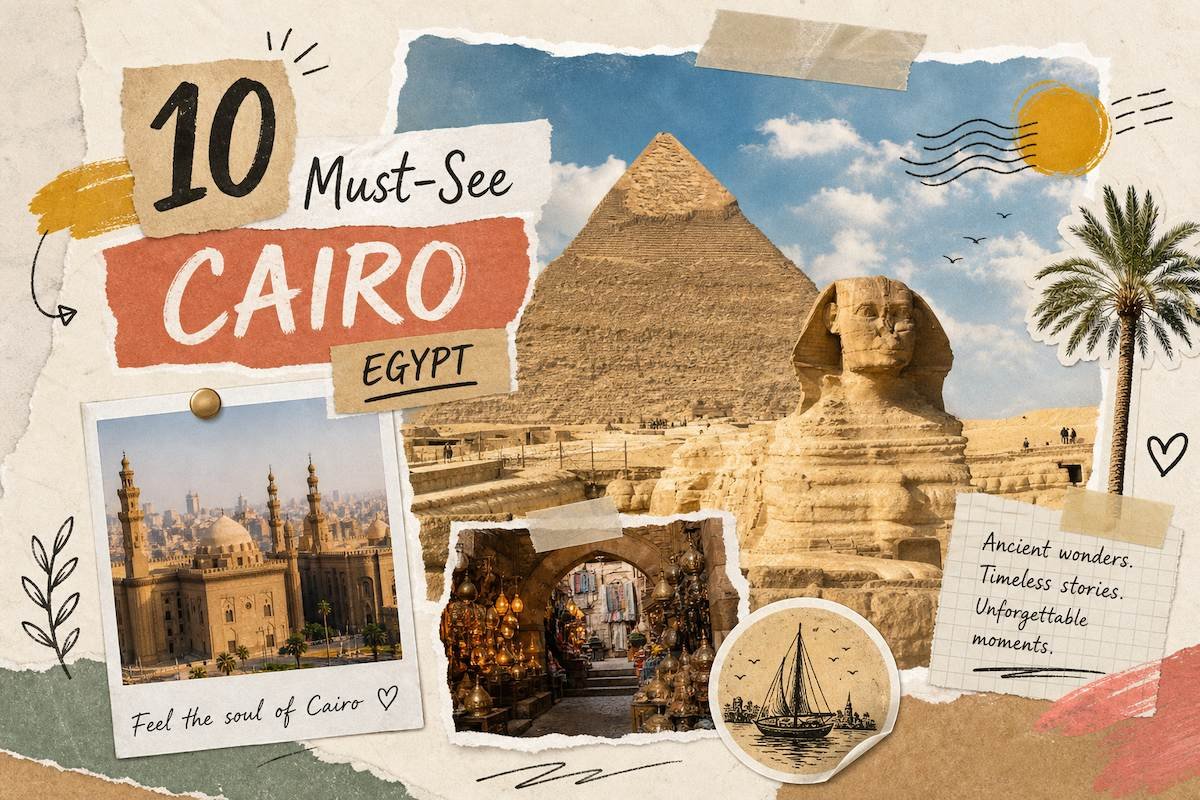
Quick Answer: The 10 must-see Giza & Cairo Attractions offer an unforgettable mix of ancient wonders and vibrant local history. Your trip should begin at the iconic Pyramids of Giza and the Great Sphinx, followed by the vast artifact collections at the Egyptian Museum. Afterward, explore the medieval architecture of the Cairo Citadel, wander through historic Coptic Cairo, and shop at the bustling Khan el-Khalili bazaar.
Cairo is one of the few cities on earth where you can stand in front of a 4,500-year-old wonder and still be back at your hotel for dinner. That combination of ancient scale and modern city life is what makes Egypt’s capital unlike anywhere else. On paper, the city can feel overwhelming: a sprawling metropolis with heavy traffic, dozens of historic sites, and a map that expands in every direction. With the right plan, though, it rewards you at every turn.
At Sunny Egypt Team, we’ve guided many American travelers through the city’s most iconic sites, and this article is our honest breakdown of where to go, in what order, and why it matters.
By the end, you’ll have a working Cairo itinerary, where to go, how long to spend, and how to make every day count.
The Giza Plateau: Where Cairo’s Ancient Story Begins
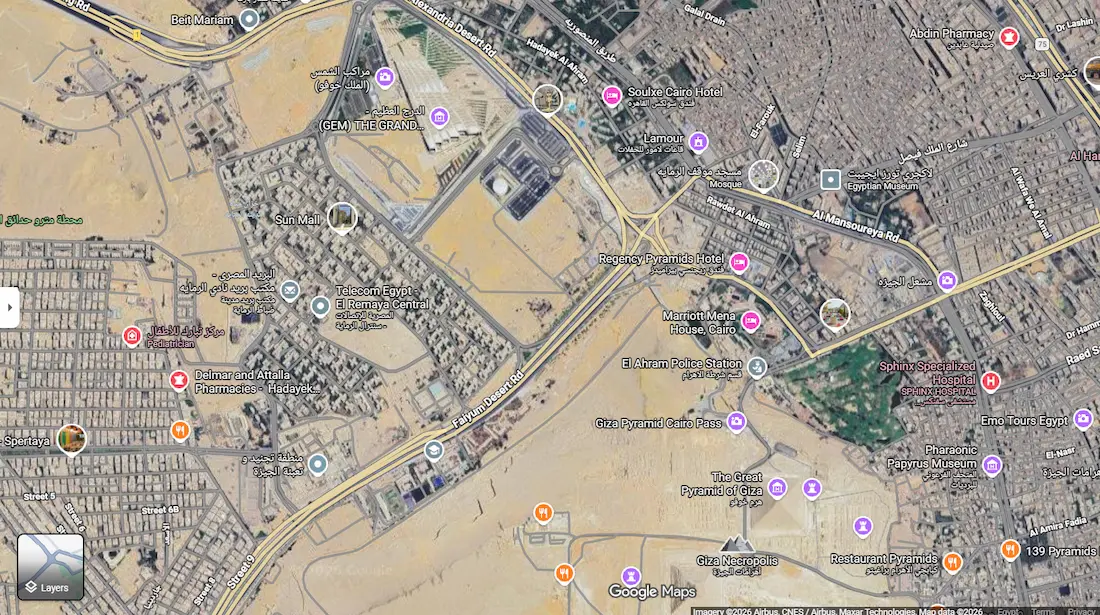
The Pyramids of Giza are the reason most people visit Egypt’s capital in the first place, and arriving at the plateau for the first time is one of the most striking experiences in travel. The scale is hard to comprehend until you’re standing at the base.
Arrive at opening time (7:00 AM) to beat the heat and the crowds, the plateau typically gets much busier after mid-morning, so earlier is always better.
1. Pyramids of Giza
General admission for foreign visitors costs 540 EGP, covering access to the full plateau and exterior views of all three main pyramids. If you want to enter the interior of the Great Pyramid of Khufu, budget an additional 900 EGP for the separate interior ticket.
A panoramic viewpoint near the southwest corner of the complex is widely used for the classic photo of all three pyramids in a single frame. The camel ride is entirely optional, if you’re going to do it, negotiate the price and confirm the return fee before you climb on.
For authoritative background on the monuments themselves, see the detailed Pyramids overview.
2. The Great Sphinx
Most visitors rush past the Sphinx on their way between pyramids and miss the best angle entirely. Many visitors find the most dramatic view is from the valley temple at the lower level, not from the plateau above. Walk down to the Valley Temple of Khafre and look back toward the Sphinx at close range. That’s the perspective worth having. Allow around 20 minutes here, separate from your time at the pyramids.
Cairo Attractions Two Must-Visit Museums (and How They Differ)
Many first-time visitors don’t realize there are now two major Egyptian antiquities museums in the city, and conflating them leads to bad planning decisions. They serve different purposes, and which one you choose depends entirely on your priorities and how much time you have.
3. The Grand Egyptian Museum (GEM)
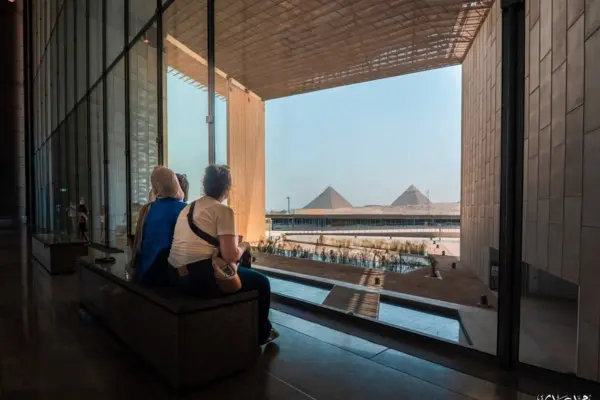
GEM is the newer, purpose-built museum located near the Giza plateau. It was designed to house the complete Tutankhamun collection alongside thousands of artifacts that had spent decades in storage, never available to the public. Foreign adult admission is 1,450 EGP, and tickets are timed-entry purchased online in advance.
Combining GEM with a morning at the pyramids in a single day is geographically smart and highly recommended for first-time visitors. The museum is open daily from 8:30 AM to 10:00 PM, which gives you solid afternoon flexibility. For current ticket pricing and booking guidelines, check the latest Grand Egyptian Museum ticket price information.
4. Egyptian Museum in Tahrir Square
The original Egyptian Museum, an early-20th-century institution sitting in the heart of downtown, offers a very different experience. It’s smaller, older, and considerably more atmospheric in the way that only a century-old building can be. For travelers who want the classic Egyptology experience and don’t need a polished modern presentation, this is the one. Its location on Tahrir Square also makes it easy to combine with an afternoon exploring downtown on foot.
Islamic Cairo: Bazaars, Mosques, and Medieval Streets
Islamic Cairo Attractions is best experienced as a half-day or full-day walking zone. Narrow lanes, centuries-old stone architecture, coffee shops that trace their roots back hundreds of years, and the call to prayer echoing off minarets at dusk, this part of the city is unlike anything in the Western world.
All three attractions below are within walking distance of each other, making this the easiest cluster to group in a single session.
5. Khan el-Khalili Bazaar
Entry to Khan el-Khalili is free, and the market is a sensory experience you won’t forget. Copper lamps, spice stalls, perfume oils, handmade textiles, and vendors who have been perfecting their craft for generations fill every lane. Buy small crafts, spices, and hand-stamped cartouches; skip the generic tourist trinkets sold near the main entrance.
Fishawi’s Café, tucked inside the market, is one of the city’s most historic coffeehouses and the right place to stop for mint tea before you keep walking.
Late afternoon or in the evening is the best time to visit, when the light softens, and the market comes fully alive.
6. Al-Moez Street and Al-Azhar Mosque
Al-Moez Street is widely regarded as one of the oldest preserved medieval streets in the Islamic world and is completely free to walk. The architecture lines both sides of the lane for nearly a kilometer, extraordinary on any budget.
Al-Azhar Mosque, directly adjacent to the bazaar, is one of Islam’s most significant institutions and welcomes non-Muslim visitors outside of prayer times. Dress modestly: shoulders and knees covered, women with a headscarf, and shoes removed before entering. Photographing the architecture is fine for Cairo Attractions.
7. Saladin Citadel and Mosque of Muhammad Ali
A short Uber ride from the bazaar brings you to the Citadel one of the famous Cairo Attractions, a medieval fortress on a hill above the city with the best panoramic views of the skyline and minarets.
Inside, the Mosque of Muhammad Ali (the Alabaster Mosque) is a genuine architectural standout, its domed silhouette is the one you see in almost every photograph of the city. Plan on 90 to 120 minutes for the complex, and come in the afternoon when the light over the city is at its best.
Coptic Cairo: The City’s Most Underrated Quarter
Coptic Cairo Attractions is quiet, genuinely ancient, and completely different in character from the rest of the city. Most first-time visitors skip it entirely, but it’s worth knowing before you finalize your itinerary.
8. Hanging Church and the Coptic Museum
The Hanging Church, known formally as Al-Mu’allaqa, is one of the oldest Christian churches in the world, built directly above the gatehouse of the Roman Babylon Fortress. The Coptic Museum next door houses 1,600 years of Christian artifacts spanning textiles, manuscripts, and early icons; foreign admission is 340 EGP.
Within walking distance, the Ben Ezra Synagogue adds another layer to the district’s rich religious history. According to local tradition, the site has been connected to biblical figures for centuries. Allow two to three hours to walk the full Coptic quarter without rushing, and go on a weekday morning when it’s at its most peaceful.
Two More Experiences Worth the Extra Time
These two attractions sit outside the central tourist cluster, but both are worth building into your Cairo itinerary if you have a second or third day. One is for history buffs; the other is for anyone who needs to slow down and breathe.
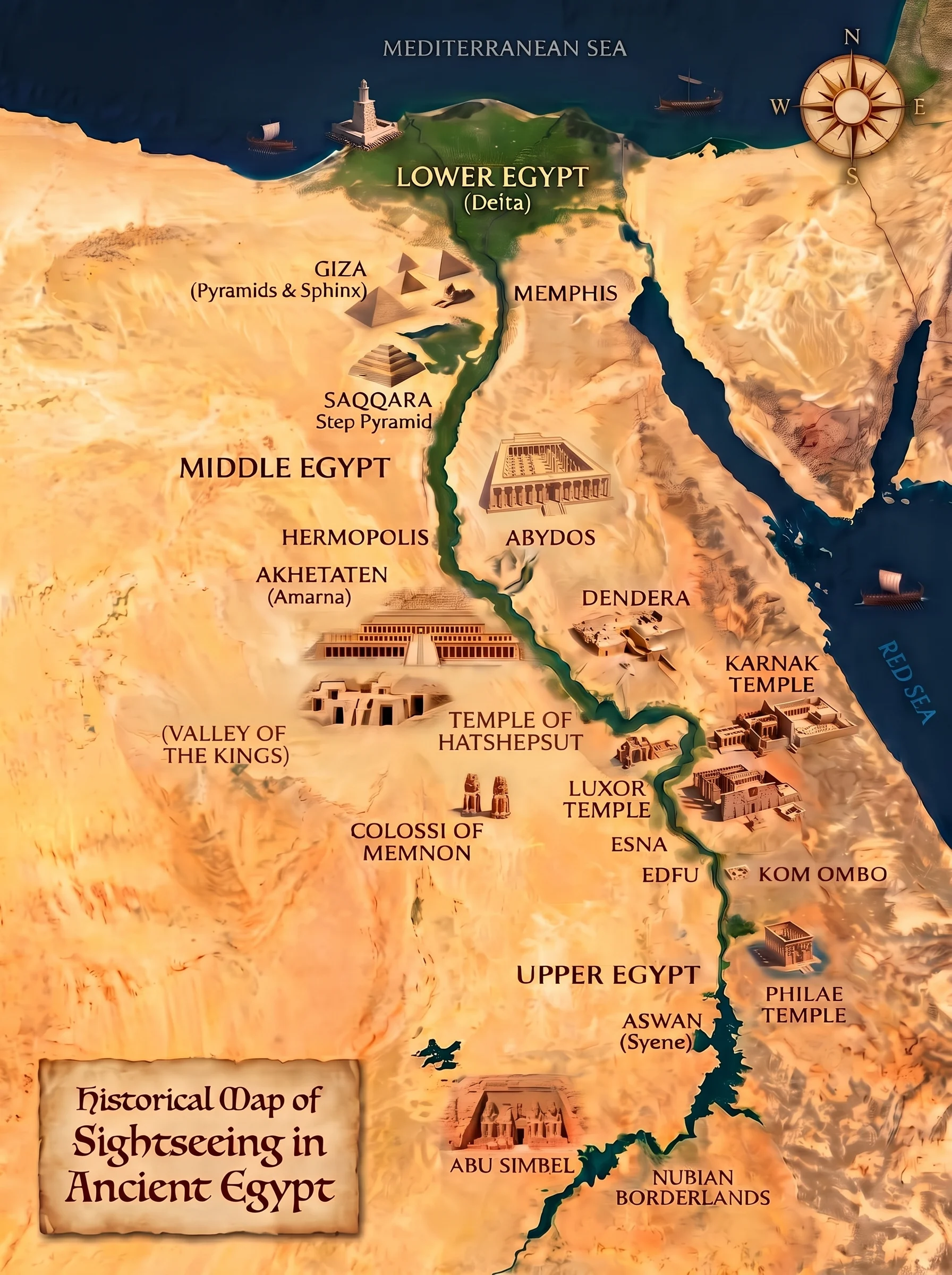
9. Saqqara and the Step Pyramid
Saqqara sits about 30 km south of the city and is best reached by private car or an arranged day trip. The Step Pyramid of Djoser predates the Giza pyramids by nearly a century and is the oldest stone pyramid on earth, a foundational piece of the archaeological story that Giza tends to overshadow.
Combine Saqqara with a stop at the ruins of Memphis (Egypt’s ancient capital) and Dahshur’s Red Pyramid for a full day of pyramid archaeology away from the crowds.
Public transport to this area is impractical for most travelers; a private driver is the recommended option. Drive time from central Cairo is roughly 45 to 60 minutes, depending on traffic. For sample transit options and route planning, consult practical transport guidance for Saqqara. (If you’re planning longer journeys from Cairo, see our guide on how to visit Abu Simbel
10. A Felucca Ride on the Nile

A felucca is a traditional wooden sailboat, and a one- to two-hour ride on the Nile at sunset is one of the most effortlessly enjoyable things to do in Cairo. No motors, no commentary, no rush. Just the river, the light, and the city sounds softening across the water. Book through a licensed operator near Zamalek, Garden City, or the Giza Nile Corniche.
Prices vary by operator and duration; short rides typically run $8 to $15 per person, while longer private trips range from $15 to $40. Late afternoon is the ideal time, when the city turns gold and the heat of the day finally eases.
Learn More>>> Top Must-See Attractions in Luxor | Egypt
Practical Planning: Timing, Budget, and Getting Around
What the Best Time to Visit Cairo Attractions
October through April is the sweet spot for a Cairo travel guide planning perspective. Temperatures during this window generally sit in the low-to-mid 20s°C (roughly 65, 77°F), though December and January tend to be cooler and March and April slightly warmer, check monthly averages when booking.


Walking the sites is comfortable, and all major attractions are fully accessible. December through February brings the best weather but also the highest hotel rates and busiest crowds. March and April offer nearly identical conditions with slightly fewer tourists. June through August is a different story: temperatures regularly exceed 35°C, and the heat makes outdoor visits uncomfortable for most people.
What a Daily Budget Looks Like
Budget travelers can manage on around $80 per day, covering basic accommodation, meals, transport, and two or three site entries. Mid-range travelers with a 3-star hotel, two restaurant meals, ride-sharing, and entrance fees should expect $180-$200 per day. These are estimates that shift with exchange rates and seasons. For more on seasonal advice, see a travel expert’s take on the best time to visit Cairo.
Learn More>>> Egypt Weather Forecast Travel Guideline | Best Time to Visit Egypt.
How Getting Around Cairo Attractions: What Actually Works
Uber and Careem are the most practical tools for moving across the city. Prices are transparent through
both apps, and you sidestep the negotiation friction of street taxis.
The Cairo Metro is useful along the Tahrir Square and downtown corridor, but its network doesn’t extend to most tourist zones.
For Giza, Saqqara, Dahshur, and any day that involves multiple sites across different parts of the city, a private car
or pre-arranged driver is the smartest move.
Traffic can turn a 10 km trip into a 45-minute ordeal, and a driver who knows the city removes that frustration entirely.
Why a Guided Day Trip Changes the Experience
Solo navigation is entirely possible, but it comes with real friction: language barriers at ticket windows, unlicensed self-appointed “guides” at major sites, confusing separate ticketing systems within the same complex, and traffic that compounds every logistical challenge.
Sunny Egypt Team’s guided tours include hotel pickup, expert multilingual guides, and transparent pricing, so you spend your energy on the sites rather than on figuring out how to reach them.
For first-time visitors, especially, the difference between a guided day and a solo day is measured in hours saved and the depth of what you actually learn at each site. Browse our Cairo day trips and tour packages to see exactly what’s included and what each experience costs. After booking, you’ll receive a confirmation page; please refer to our Thank You page for next steps and contact details.
Learn More>>> How to Visit Abu Simbel Temple in Egypt
FAQ (People Also Ask) About Visiting Cairo
Is Cairo safe for tourists?
The main tourist areas, Giza, Islamic Cairo, Coptic Cairo, and downtown, are well-traveled and generally safe for visitors. Standard precautions apply: keep valuables secure, use licensed transport apps like Uber or Careem, and book site entries through official channels. A guided tour adds an extra layer of confidence, particularly for first-time visitors navigating unfamiliar areas.
How many days do you need to visit Cairo Attractions?
Three full days is a solid minimum for covering the highlights in this guide without rushing. Day one works well for the Giza plateau and GEM; day two for Islamic and Coptic Cairo; day three for a day trip to Saqqara, Memphis, and Dahshur.
A fourth day gives you breathing room for the Egyptian Museum, a felucca ride, and any sites you want to revisit.
What is the best way to get around Cairo as a tourist?
Uber and Careem are the most reliable options for most journeys. For day trips to Saqqara, Dahshur, or any itinerary covering multiple sites, a pre-arranged private driver saves significant time. The metro is useful for a few downtown routes but doesn’t reach most major attractions.