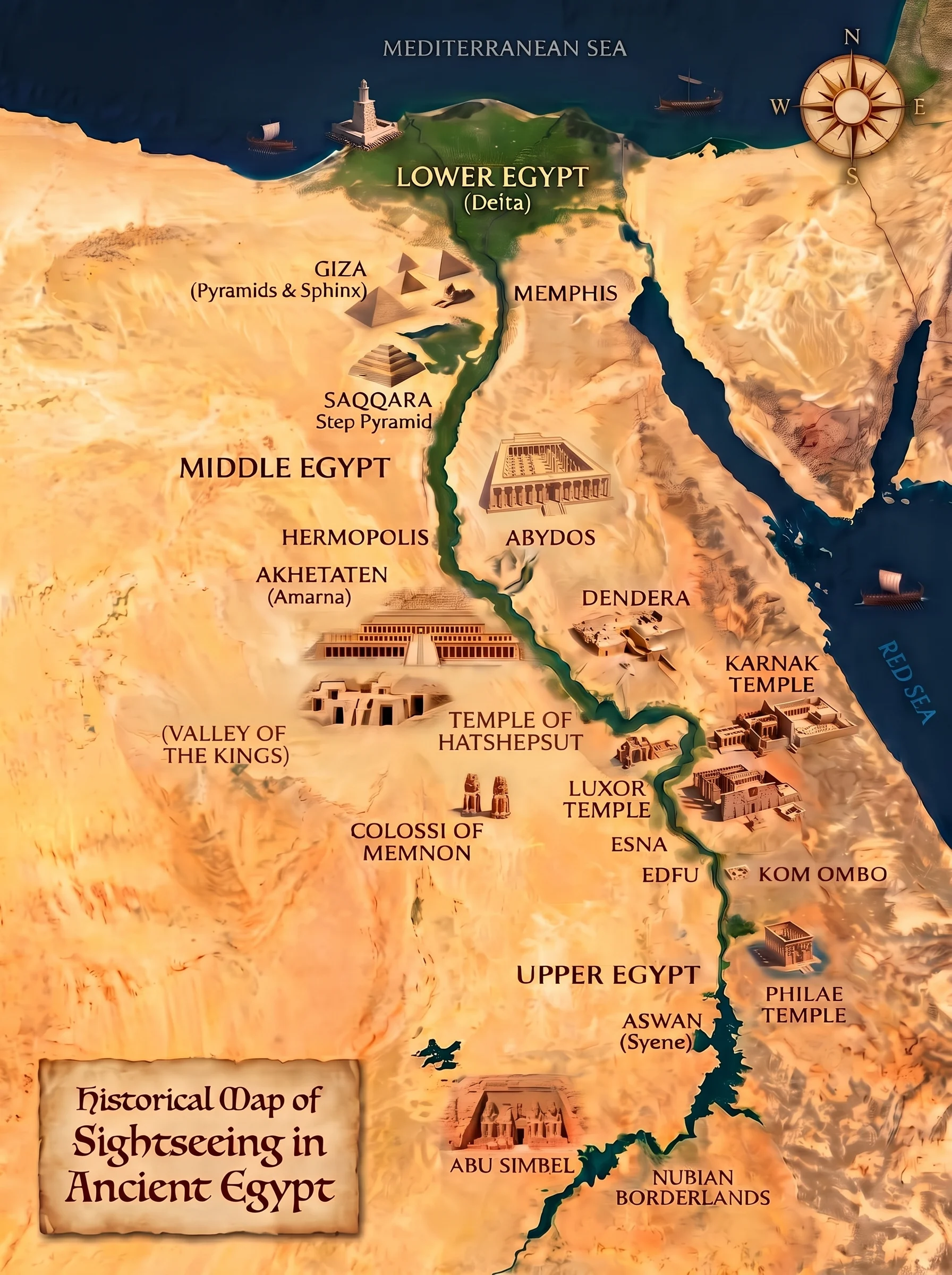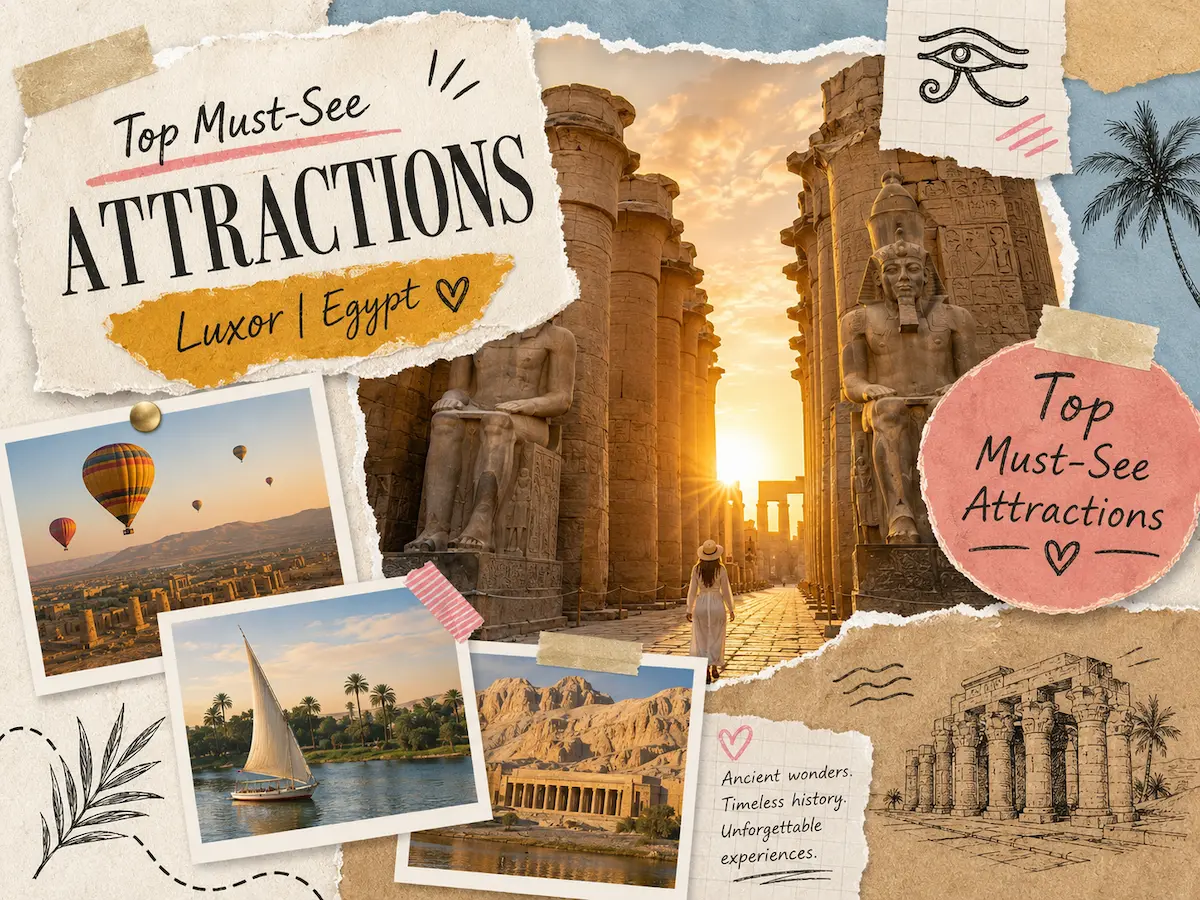
Quick Answer: The top attractions in Luxor offer an incredible journey through ancient Egypt, famously divided by the Nile River. Start your trip on the East Bank by exploring the massive Karnak Temple complex and the historic Avenue of Sphinxes. Then, cross to the West Bank to discover royal tombs inside the Valley of the Kings and the stunning terraces of Queen Hatshepsut’s Temple.
If you searched “Luxor” and expecting a Vegas casino, you’re in the wrong place, and honestly? You’re
missing out on something far more extraordinary. Sitting on the east bank of the Nile in Upper Egypt, this
ancient city was once Thebes, the most powerful capital in the ancient world. Ancient Thebes served as
Egypt’s capital during the New Kingdom for several centuries, and what it left behind is staggering.
This Luxor travel guide covers 8 attractions worth flying across the world for, plus everything you need to plan the trip: when to go, how to get there, what tickets cost, and how long to stay.
Whether you’re flying in from Cairo, sailing the Nile, or considering a day trip from Hurghada, getting here is far simpler than most first-time visitors expect. UNESCO World Heritage Centre
What Makes Luxor, Egypt Worth the Trip
The City That Used to Rule the Ancient World
Ancient Thebes served as Egypt’s capital during the New Kingdom, the era of Tutankhamun, Ramesses II,
and Hatshepsut. Pharaoh after pharaoh added to the city for centuries, and what they built has outlasted
almost everything else humans have ever constructed.
You can walk into structures older than the Roman Empire before lunch and descend into royal tombs by afternoon, all within a few square miles.
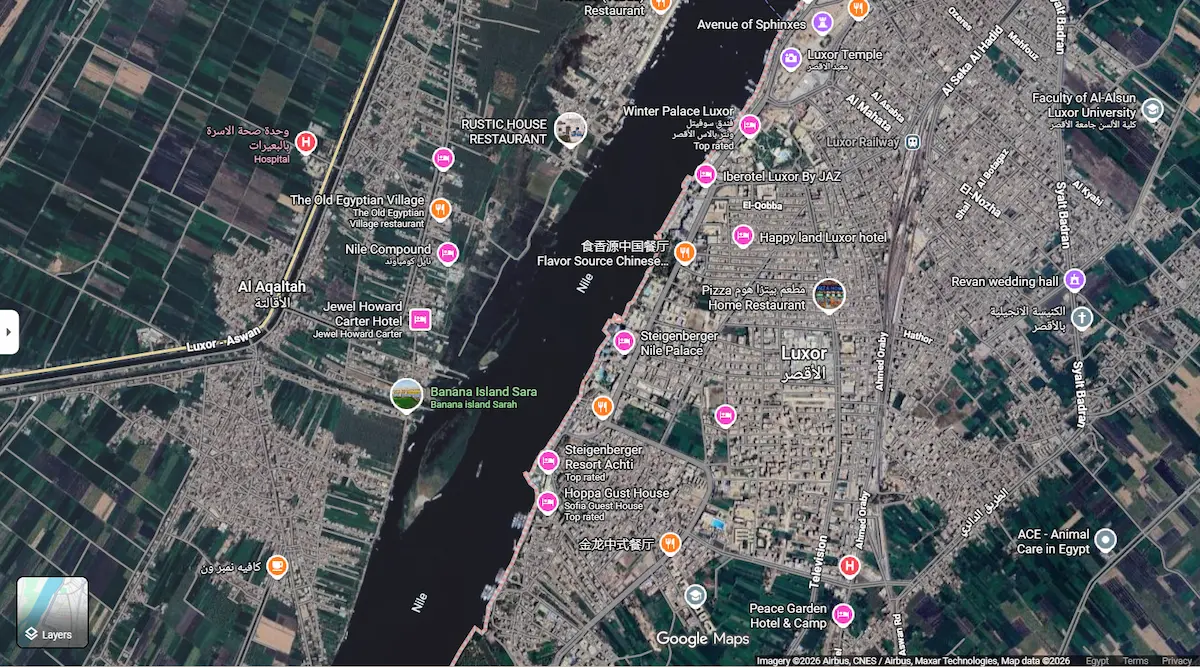
The city is essentially split by the Nile into two distinct zones: the East Bank, home to temples of the
living, and the West Bank, reserved for tombs of the dead. That geographic logic shapes how you plan
your time here, and understanding it makes the whole trip click.
East Bank vs. West Bank: How the City is Laid Out
The East Bank holds the city center, Karnak Temple, Luxor Temple, the Avenue of Sphinxes, the museums,
most hotels, and the train station. The West Bank holds the Valley of the Kings, Hatshepsut’s temple, the
Valley of the Queens, Medinet Habu, and the Colossi of Memnon.
Many first-time visitors spend about three days to see the major sites comfortably, though two days can cover key highlights if your itinerary is tightly scheduled.
If you’re arriving on a day trip from Hurghada, the best approach is to prioritize the highlights and move efficiently between them.
East Bank Attractions: Temples You Can Walk Right Into
1- Karnak Temple Complex
Karnak is one of the largest ancient religious complexes ever built, covering roughly 200 acres according to widely cited archaeological references. The Great Hypostyle Hall alone contains 134 massive columns arranged in 16 rows, each carved with hieroglyphs and towering overhead. Different pharaohs added to the complex over the course of 2,000 years, each leaving their mark on an already enormous structure. Open from 6:00 am to 5:30 pm. Admission is EGP 500 for foreign adults. Arrive early to beat tour groups and the midday heat.
2- Luxor Temple
Unlike most ancient sites, Luxor Temple sits right in the city center and stays open until 8:00 pm, making
it the one attraction that genuinely rewards an evening visit. The temple is dramatically floodlit at night,
and the atmosphere after dark is completely different from daytime sightseeing. The Avenue of Sphinxes,
now partially excavated, once connected it to Karnak over 3 kilometers away. Admission is EGP 500 for
foreign adults, the same as Karnak.
3- Avenue of Sphinxes
The Avenue of Sphinxes runs the full 3-kilometer stretch between Karnak and Luxor Temple, largely
accessible on foot along the excavated promenade. It’s an easy addition to any East Bank morning and
connects the two temples in a way that makes the ancient city’s scale feel genuinely real.
4- Luxor Museum and Mummification Museum
The Luxor Museum holds a carefully curated collection of New Kingdom art in a well-organized space,
compact, well-labeled, and far more manageable than the sprawling halls of Cairo’s Egyptian Museum.
The Mummification Museum rounds out the East Bank with a compelling look at the science and ritual
behind ancient embalming, covering everything from the tools used to the specific stages of the process.
Both are easy to fit into the same afternoon without feeling rushed.
West Bank Attractions: Tombs, Queens, and Pharaonic Legend
5- Valley of the Kings
The Valley of the Kings is the most visited site on the West Bank, and the reputation is fully earned. This is
the royal burial ground for New Kingdom pharaohs, including Tutankhamun and Ramesses II, carved deep into the limestone cliffs. Standard admission is EGP 750 for foreign adults, covering entry to three tombs.
Tutankhamun’s tomb costs an additional EGP 700, a premium worth considering for the painted murals
and the pharaoh’s sarcophagus still in situ. The site opens at 6:00 am, and arriving early is non-negotiable:
Heat and crowds both peak quickly after 9:00 am.
6- Temple of Hatshepsut (Deir el-Bahari)
Hatshepsut’s mortuary temple rises in dramatic colonnaded tiers against pale limestone cliffs, making it
one of the most visually striking structures in all of Egypt. Built by Egypt’s most famous female pharaoh, it
sits a short drive from the Valley of the Kings and is almost always included in organized West Bank tours
as a natural pairing.
Admission costs EGP 440 for foreign adults, and the site opens at 6:00 am with last entry at 5:00 pm in summer.
7- Valley of the Queens
The Valley of the Queens holds the tomb of Queen Nefertari, considered one of the most beautifully
painted burial chambers anywhere in Egypt. Nefertari’s tomb requires a separate ticket on top of general
site entry, but the wall art inside is extraordinary, some of the best-preserved color in any royal tomb in the country.
8- Medinet Habu and the Colossi of Memnon
Medinet Habu, the mortuary temple of Ramesses III, is dramatically well-preserved, with vivid battle reliefs
retaining much of their original painted detail. It draws significantly fewer visitors than Karnak, which
makes it one of the most rewarding underrated stops on the West Bank.
The Colossi of Memnon, two giant seated stone statues marking the entrance to the ancient necropolis, are an open-access site and an easy stop on any West Bank circuit.
Learn More>>> 10 Must-See Attractions in Cairo | Egypt
Best Time to Visit and What Tickets Actually Cost
When to Go: Seasons and Temperature
October through November and March through April offer the best balance of comfortable temperatures,
around 25 to 30°C, with manageable crowds and competitive prices. December through February is the
coolest and most popular window, which means higher hotel rates and busier sites at peak hours.


May through September brings intense heat, often above 40°C, making outdoor sightseeing genuinely
exhausting for most visitors. For American travelers planning a first trip, the October-to-April window is
the reliable choice across all three criteria: weather, access, and value, with October, November, and
March and April stand out as the sweet spots for that balance. For a more detailed seasonal breakdown,
see this best times to visit Egypt guide.
Learn More>>> Egypt Forecast Travel Guideline
Ticket Prices at a Glance
Here’s a quick summary of current admission prices for the major sites:
Karnak Temple: EGP 500 (foreign adult), open 6:00 am to 5:30 pm
Luxor Temple: EGP 500 (foreign adult), open 6:00 am to 8:00 pm
Valley of the Kings: EGP 750 (foreign adult, covers 3 tombs), open 6:00 am to 5:00 pm
Tutankhamun’s tomb: EGP 700 extra on top of the standard ticket
Temple of Hatshepsut: EGP 440 (foreign adult), open 6:00 am to 5:00 pm
Egyptian pound prices shift relative to the USD, so check the current exchange rate before budgeting. As a practical note, booking through an organized tour typically bundles entrance fees and handles all the
ticketing logistics, removing a genuine headache from your day.
For official fee details, you can consult the Ministry of Tourism’s ticket price list, or this helpful Luxor entrance fees guide for a quick reference to typical visitor costs.
How to Get to Luxor from Anywhere in Egypt
Flying in, Taking the Train, or Sailing the Nile
Luxor International Airport (LXR) receives domestic flights from Cairo in roughly one hour, with one-way
tickets averaging around $150 in 2026. Most international travelers land at Cairo International Airport
(CAI) and connect from there. The overnight sleeper train from Cairo takes 10 to 11 hours and is the
cheapest overland option, arriving directly at the railway station on the East Bank.
A Nile cruise between Aswan and Luxor takes 3 to 5 nights and is the most scenic way to arrive, working best as part of a multicity Egypt itinerary rather than a standalone transfer.
The Hurghada & Marsa Alam-to-Luxor Day Trip: The Most Practical Option for Red Sea Travelers
Travelers based in Hurghada or Marsa Alam are only about 3.5 to 4 hours away by road and might be more time from Marsa Alam, depending on your hotel location in Marsa Alam, which makes a day trip genuinely realistic. The route cuts through the Eastern Desert via a direct highway through Safaga city, and the drive itself is straightforward.
Rather than arranging private transport, navigating site ticketing independently, and working out the East Bank versus West Bank logistics yourself, booking through an organized operator removes every friction point from the day. If you prefer a budget-friendly option, consider the Day Trip from Hurghada to Luxor by Bus.
Sunny Egypt Team’s Minivan Day Trip from Hurghada to Luxor is built around exactly this need: private transport, multilingual-speaking guides, and a structured itinerary covering the Valley of the Kings, Karnak, and Luxor Temple in one efficient day. For anyone staying on the Red Sea coast, this is the clearest path to adding these ancient sites to your trip without rebuilding an entire itinerary around them.
Learn More>>> Hurghada VS Marsa Alam
Where to Stay and How Much Time to Plan
East Bank vs. West Bank Accommodation
First-time visitors are best served by the East Bank: central location, easy access to restaurants, shops,
the train station, and Luxor Temple right on your doorstep. Budget rooms run $15 to $30 per night,
comfortable mid-range hotels with Nile views average $50 to $80, and luxury properties sit in the $150 to
$300 range. The West Bank is quieter and cheaper, and it suits archaeology-focused travelers who want to
be close to the tombs at sunrise. For most first-time visitors, the East Bank simply makes daily logistics
easier.
For extra reading on Luxor’s major treasures and New Discoveries in the Luxor context, before you go. Dr Zahi Hawass website who many travelers find useful.
One Day, Two Days, or Three Days: How to Decide
A single organized day trip is enough to cover the essential highlights: Valley of the Kings, Hatshepsut,
Karnak, and Luxor Temple.
Two full days allow a more relaxed pace, West Bank in the morning, East Bank in the evening, plus time for the museums and the Avenue of Sphinxes.
Three days lets you revisit favorites, explore secondary sites like Medinet Habu or the Valley of the Queens at your own pace, and absorb the city without feeling rushed. For most first-time visitors, two days is the sweet spot between seeing enough and feeling like you actually experienced the place.
Ready to Book? Here’s Your Next Step
This is one of the most extraordinary destinations in the world, and the logistics are genuinely simpler
than they look from the outside. Visit between October and April, prioritize the Valley of the Kings and
Karnak, and decide early whether you want a standalone trip or a day excursion built around a Hurghada
stay.
Travelers based on the Red Sea coast have a particularly easy path here. Sunny Egypt Team handles the
transport, the ticketing, the guide, and the itinerary, so you show up, experience the ancient world, and get back to your hotel without the planning stress. Browse the Luxor tours and packages, pick the itinerary that fits your trip, and book before the best travel dates fill up. The temples have been waiting 3,000 years. They’ll be there. But the good tour slots won’t.
Learn More>>> Can I do a Day Trip to Luxor from Hurghada?
Learn More>>> Hula Hula Island or Orange Bay
FAQ`s
Is Luxor worth visiting?
Yes, Luxor is worth visiting, especially if you love ancient Egypt. The city is often described as an open-air museum because it has some of Egypt’s greatest temples, tombs, statues, and ancient sites along the Nile.
How many days do you need in Luxor?
You need at least 2 days in Luxor to see the main attractions without rushing. One day can cover Karnak Temple, Luxor Temple, and part of the West Bank. Two days give you better time for the Valley of the Kings, Hatshepsut Temple, Medinet Habu, Luxor Museum, and sunset by the Nile.
What is the best time to visit Luxor?
The best time to visit Luxor is usually from October to April, when the weather feels more comfortable for walking around temples and tombs. Some travel sources highlight February to April and late September to early November as good periods for manageable heat and fewer crowds.
What is better, East Bank or West Bank in Luxor?
Both are important. The East Bank is best for Karnak Temple, Luxor Temple, museums, restaurants, and city life. The West Bank is best for tombs and mortuary temples, including Valley of the Kings, Hatshepsut Temple, Valley of the Queens, Medinet Habu, and Colossi of Memnon.
Can I visit Luxor in one day?
Yes, you can visit Luxor in one day, but the day will feel busy. A good one-day plan includes Karnak Temple, Valley of the Kings, Hatshepsut Temple, Colossi of Memnon, and Luxor Temple if time allows.
What should I wear when visiting Luxor attractions?
Wear light clothes, comfortable walking shoes, sunglasses, sunscreen, and a hat. Luxor can feel hot, especially in open temple areas. In winter, bring a light jacket for early morning or evening.
Do I need a guide in Luxor?
A guide is highly recommended in Luxor. Many temples and tombs have deep historical meaning. A good guide helps you understand the stories, symbols, kings, queens, and gods instead of only taking photos.
Is Luxor safe for tourists?
Yes, Luxor is generally safe for tourists in the main sightseeing areas, especially when you travel with a trusted guide, licensed driver, or organized tour. Keep your personal items with you, drink enough water, and avoid unknown street offers.